





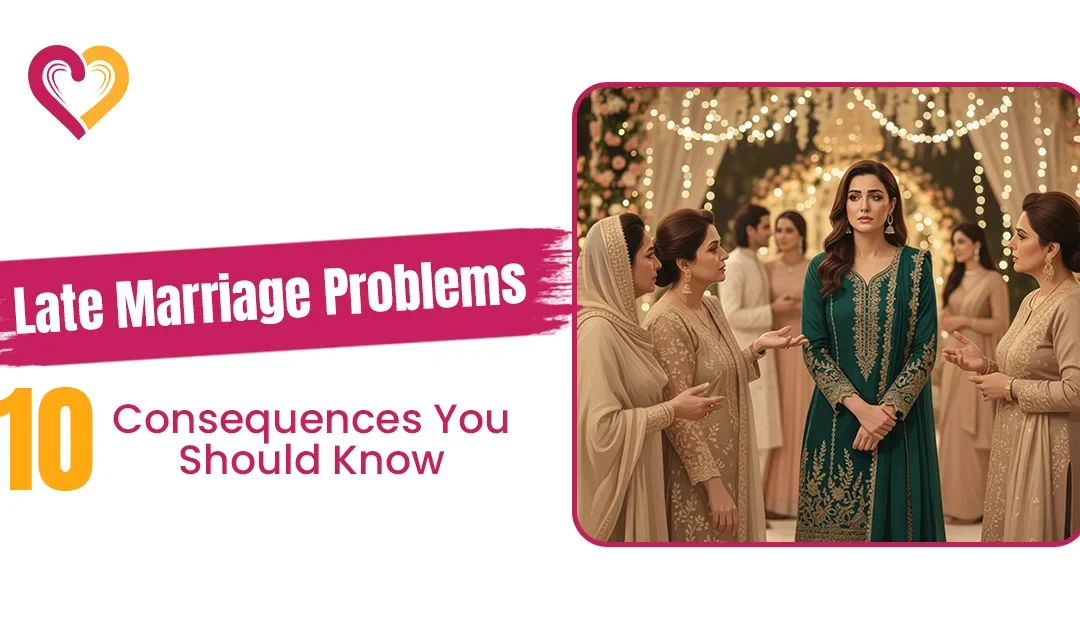
The present generation is no longer rushing into marriage. Over the last few decades, the average age of marriage has steadily increased across almost every region of the world. In the past, women typically married around 20, and men by 26.
Today, however, most people marry between 28 and 32. This shift is driven by factors such as education, career goals, financial stability, and changing lifestyles, which together contribute to various late marriage problems.
Although the Simple Rishta matrimonial app’s trends on desirable qualities in Pakistani girls for marriage highlight many important traits. Most families still prefer younger brides, which puts extra pressure on both the families and the girls.
At the same time, a large quantitative study conducted in Lahore, Punjab, with 2,750 respondents, found that financial pressures, income instability, unemployment, high housing costs, and even dowry expectations are the main reasons why many people delay marriage in Pakistan. These factors show that late marriage is influenced not only by personal choices but also by social, economic, and cultural pressures.
Similarly, a social science survey in Bangladesh reported that 78% of participants associated late marriage with depression and lack of focus at work, while 69% experienced psychosocial stress due to delayed marital decisions.
In Saudi Arabia, research involving 473 young adults showed that high living costs and housing expenses were the key factors behind postponing marriage.
Moreover, in Western countries, couples often live together before marriage, which reduces the urgency to formalize relationships. In contrast, South Asian and Middle Eastern societies maintain strong cultural expectations, making late marriage a source of emotional pressure and social concern.
Overall, these studies highlight that delayed marriage issues are not merely a personal choice — they significantly affect mental health, family life, and society as a whole.
What Is Considered Late Marriage?
In social and demographic studies, late marriage usually means getting married after the typical age in a society. In many South Asian and Arab communities, people traditionally married in their early to mid-20s. Today, however, more people are marrying in their late 20s or 30s. This is often due to longer education, focus on careers, financial challenges, and personal goals.
Why Are Millennials and Gen Z Choosing Late Marriage?
The age at which people marry has reached an all-time high. In the United States, women now marry at a median age of 27, and men at nearly 29, compared with previous generations who married in their early 20s.
Moreover, this trend is even stronger among younger generations. For instance, of those born in 1998, only 2% of men and 4% of women married before age 25. Experts also predict that just over half of Gen Z will marry at all, 56% of men and 58% of women.
This shift is not just a lifestyle choice. It reflects how young adults are rethinking relationships, stability, and life milestones. Which also raises the question: Delayed Marriage – Bliss or Miss?
Furthermore, research and expert analysis identify 6 key reasons why Millennials and Gen Z are delaying or even avoiding marriage, highlighting a major change in how society approaches partnerships today. So, before discussing consequences, it’s helpful to understand why late marriage is happening:
Financial Pressures
Many young adults face high living costs, student loans, housing expenses, and even wedding costs. These financial pressures make getting married and starting a family more challenging. As a result, they often wait until they feel financially stable.
Career and Education Goals
Millennials and Gen Z focus on higher education and building their careers before marriage. They spend more time studying or gaining work experience, which naturally delays their decision to marry.
Changing Attitudes Toward Relationships
Younger generations value independence, personal growth, and self-discovery. Many choose cohabitation or long-term relationships without marriage, seeing them as valid alternatives to formal marriage.
Fear of Divorce or Unstable Marriages
Having seen high divorce rates among older generations, many young adults take marriage seriously. They want to ensure compatibility and stability before making a lifelong commitment.
Cultural and Social Shifts
Society puts less pressure on young adults to marry early, especially in urban areas. Marriage is no longer seen as a mandatory milestone, giving people the freedom to decide when or whether to marry.
Desire for Personal Freedom and Lifestyle
Many young adults prioritize experiences, travel, and personal lifestyle over early marriage. They enjoy the flexibility and independence of single life before settling down.
Late Marriage Problems and Their Consequences
Many people today are marrying later in life than previous generations. While delayed marriage can bring maturity and stability, it also leads to a range of challenges that affect individuals, families, and society.
1. Increased Psychological Stress and Anxiety
First, delaying marriage often creates pressure from society and family. Many young adults feel stressed or worried about meeting cultural expectations.
In South Asian societies like Pakistan, where marriage is an important cultural milestone, people who delay marriage may face criticism. A large study in Lahore found that financial stress and social pressure were key reasons why many postpone marriages, which in turn increases anxiety and mental strain.
2. Health and Fertility Challenges
Delaying marriage can affect both health and fertility. Studies show that married individuals often enjoy better long-term physical and mental health, partly because of the emotional support a partner provides. When people marry later, they may miss out on these benefits, which can increase stress and affect overall well-being.
At the same time, fertility naturally declines with age, especially for women, making conception more difficult. Couples who marry later may face the need for fertility treatments, which can be both expensive and emotionally draining.
3. Higher Cost of Starting a Family
Delayed marriage often goes hand‑in‑hand with delayed parenthood. At the same time, the cost of raising children, securing a home, and supporting a family continues to rise. For example, research in Saudi Arabia pointed out that high housing and living costs are major reasons young adults delay marriage.
4. Social Isolation and Loneliness
Also, people who are unmarried later in life can feel isolated. Friends and peers may already be married to families, which can leave late‑married adults feeling alone or left out of social groups and activities.
5. Strain on Future Relationships
When people marry later, they often come into a relationship with strong personal habits and preferences. While this can be positive, it may also make compromise harder. Adjusting to a partner’s lifestyle, habits, and routines can take more effort than for couples who marry younger.
6. Demographic Changes in Society
At a broader level, late marriage affects society too. Countries with more adults marrying late often see lower birth rates and aging populations. This can lead to fewer workers in the economy and more people needing support in their older years.
7. The “Sandwich Generation” Stress
Couples who marry and have children later may find themselves caring for both young kids and aging parents at the same time. This “sandwich” stress can affect emotional and financial well‑being.
8. Work versus Family Balance Stress
When adults focus on careers and delay marriage at the same time, it can create tension between work and personal life. Long work hours without strong family support may increase stress and reduce overall life balance.
9. Family and Cultural Pressure
In societies where marriage at a certain age is expected, delaying can lead to greater family pressure. In Pakistan and many South Asian cultures, families often encourage early marriage, and when people delay it, relatives may express concern, worry, or judgement, increasing emotional burden.
10. Impact on Children and Parenting Time
Finally, when couples marry late and have children later, they may face challenges related to age. Although older parents may be financially prepared, they may also have less physical energy to keep up with young children. In addition, older parenting can affect long‑term plans like travel, retirement, and time spent with grandchildren.
How Are Societies Responding to Late Marriage Trends?
1. Policy and Social Initiatives
Governments and NGOs in many countries are starting to recognize late marriage as a growing social issue. To address it, they are introducing programs such as marriage encouragement initiatives, financial support for young couples, and public awareness campaigns that help people balance education, careers, and family life.
These efforts show that late marriage is not just a personal choice but also a social and economic challenge that needs careful planning.
2. Mitigation Strategies
Understanding the consequences of delayed marriage helps couples handle them proactively. Experts recommend several strategies:
- Pre-marital fertility counseling to realistically assess reproductive health.
- Financial planning sessions to manage higher costs and potential fertility treatments.
- Flexibility training through couples therapy to unlearn rigid independent habits.
- Building support networks with other couples who marry later.
- Prioritizing health optimization before attempting conception.
By following these steps and taking advantage of available social programs, couples can reduce stress, improve relationship stability, and better manage the challenges of late marriage.
Conclusion
Late marriage brings both benefits and challenges. While it allows individuals to gain maturity, financial stability, and personal growth, it can also create stress, health and fertility concerns, social pressures, and family planning challenges.
By understanding these late marriage problems and using strategies like financial planning, fertility counseling, and building support networks, couples can make informed decisions and enjoy healthier, more balanced relationships.
Frequently Asked Questions
Does late marriage cause fertility issues?
Yes, fertility naturally declines with age, particularly for women, and late marriage often delays childbearing, which can increase reliance on medical assistance.
Can late marriage affect mental health?
Research shows that societal expectations and isolation linked to delayed marriage can contribute to anxiety and stress.
How can individuals cope with late marriage problems?
Strategies include open communication with loved ones, focusing on life purpose, seeking counseling, and balancing personal goals.
What are the psychological effects of late marriage?
Delaying marriage can increase stress, anxiety, and feelings of social pressure. It may also cause loneliness if peers are already married. However, it can bring emotional maturity and better decision-making.
What is the late marriage age for females?
In many South Asian countries, marrying after 28 years is often considered late for women, though this varies by culture and society.
What is the late marriage age for males?
For men, marrying after 30 years is generally considered late in many cultures, but it can differ depending on social and economic factors.
Is late marriage better than early marriage?
It depends. Late marriage allows more personal growth, financial stability, and career focus. Early marriage may offer longer family-building time. Both have pros and cons.
Is late marriage good or bad?
Late marriage is not strictly good or bad. It can reduce impulsive decisions and increase maturity, but it may also bring fertility, health, and social challenges.
What are the advantages of late marriage?
Advantages include greater emotional maturity, financial readiness, better life experience, stronger decision-making, and clearer understanding of personal goals.
How does marriage psychology explain late marriage?
Marriage psychology studies how emotions, behavior, and mental health affect relationships. It shows that many people choose late marriage to achieve emotional maturity, career stability, and better decision-making, which can improve long-term marital satisfaction.
What are the health problems of late marriage?
Late marriage can increase stress, reduce fertility, and raise the risk of complications during pregnancy, especially for women.
What are the causes and effects of late marriage?
Causes include financial pressure, career focus, education, and personal freedom. Effects can be stress, social pressure, fertility challenges, and complex family planning.



جلدی شادی کر کے کون سا کدو میں تیر مار لینا ہوتا ہے۔ 🙄
Khushi se kon shaadi late krta hai, ye to halaat hai jo haq mei nai hotey 😒
Hence proved; late marriage is always not a bad option as it gives you time for self growth…
You explain the points well…
شکریہ 🙂