





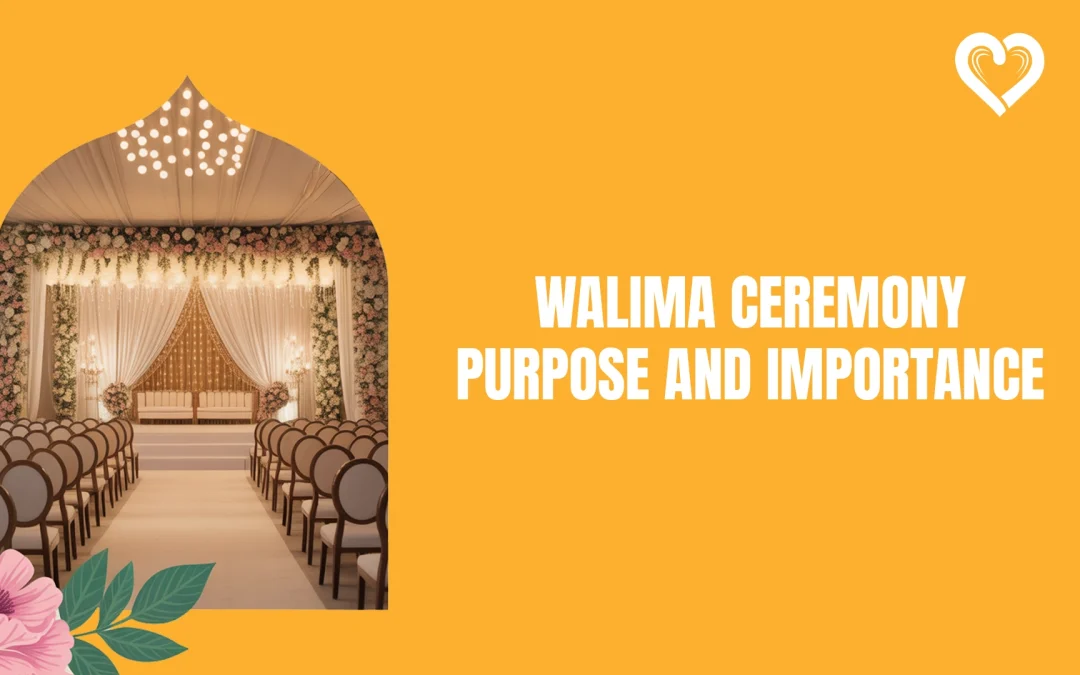
Marriage is an exciting milestone. After signing the Nikah nama, many Muslim couples look forward to one major celebration, the Walima ceremony. But what exactly is Walima? What is its importance and purpose? This blog will explain everything you need to know.
What is Walima?
A Walima is the wedding reception or feast in an Islamic wedding. It takes place after the official marriage ceremony of Nikah. Both the bride’s and groom’s families celebrate it with joy. People often ask, “Who arranges the Walima reception?” In most cases, the groom and his family host the Walima reception.
Additionally, in Pakistani weddings, the bride’s and groom’s Walima outfits are usually arranged by their in-laws. Which makes the celebration even more special. Guests eagerly wait to see their outfits, enjoy delicious food, and meet relatives and friends.
What is Walima in Islam?
Marriage in Islam is regarded as half of a believer’s faith. Moreover, the Prophet Muhammad PBUH, encouraged Muslims to celebrate it openly. The Qur’an does not mention the word “Walima,” but several authentic Hadiths do.
The Prophet Muhammad PBUH held a Walima when he married Safiyyah (Sahih al-Bukhari) and encouraged others to do the same. Therefore, in Islamic law, Walima is a recommended Sunnah act, not an obligation.
Purpose of Walima
The purpose of Walima is both religious and social. Some main purposes include:
1. Public announcement
A Walima removes any doubt about the couple’s legitimacy.
2. Gratitude to Allah
Sharing food is a way to thank Allah for bringing two people together.
3. Celebration of Marriage
It marks the beginning of a new life together for the husband and wife.
4. Social support
Friends and relatives make dua (prayers) for the newlyweds and offer help.
5. Sharing Happiness
The couple shares their joy with family, friends, and neighbours.
Importance of Walima
The Walima ceremony has significant importance in Islam for several reasons. Whether the marriage is traditional or a court marriage, the Walima is still an important Sunnah celebration. It takes place after the Nikah.
- The Walima completes the marriage process. Many scholars say marriage is not truly “public” until the Walima.
- It follows the Prophet’s example. Loving what he loved brings spiritual reward.
- The event of Walima sets a good example for others about the simplicity and beauty of Islamic celebrations.
- It protects the couple from gossip. An open feast shows there is nothing to hide.
- The Walima begins the marriage on a note of generosity. Which shows that the groom is ready to provide.
What Happens at a Walima Ceremony?
While celebrating Walima, every culture adds its own flavor. However, a Walima ceremony usually brings family, friends, and neighbours together to celebrate the marriage. Guests share the joy, savor traditional food and sweets, and offer prayers and blessings for the couple’s future.
Nowadays, the Walima ceremony has become a big event. Once the hall fills, the lights dim, and the couple makes a grand entrance under soft confetti or dry-ice fog. They pause for the official photographer before joining their parents on the stage. A buffet or plated service serves a fusion menu. Moreover, the couple cuts a five-tier cake.
While guests eat, a slideshow of Nikah day plays on big screens. A friend shares fun stories about the bride and groom with a microphone. Short speeches follow: the fathers thank everyone, the best man tells a joke, and the bride’s sister gives a dua for blessings. Then guests line up to take photos with the couple.
Walima Ceremony Card
Besides festive food, décor, and the couple’s and guests’ outfits, and the Dholki event, one important thing is the Walima ceremony card. Right after fixing the wedding date, families usually start discussing the card’s design and theme. Some common questions include:
- “What should be written on a Walima invitation card?”
- “What will be the theme of the card?”
Typically, the bride’s family prints the invitations for Nikah or Barat, while the groom’s family prints the Walima invitation card. It usually includes the names of the bride and groom, date, time, venue, and a short Qur’anic verse or dua, keeping the design simple and elegant.
The Sunnah Way of Walima
- First, the Walima must take place after consummation, and not before, to follow the Sunnah.
- Second, the groom spends only within his means, because Islam discourages taking on debt for luxury.
- Third, the hosts should serve food that is simple yet sufficient, such as meat, rice, and sweets, so that everyone can eat comfortably.
- Fourth, they should invite close relatives first, then neighbours, and finally the needy, ensuring that no one is left out.
- Fifth, everyone should avoid sinful elements, including music with immoral lyrics, alcohol, or free mixing that breaks Islamic rules, to maintain propriety.
- Finally, the intention should focus purely on Allah’s pleasure, while also spreading happiness within the community.
Is Walima compulsory after Nikkah?
The best time to organize a Walima is after consummating the marriage, following the example of Prophet Muhammad (peace be upon him). However, scholars allow flexibility. For example, it can be held before consummation or right after the marriage contract. Also, cultural customs and financial ability can influence the timing.
Difference Between Walima Reception or Ceremony
People often use Walima ceremony and Walima reception interchangeably, but there is a practical difference.
1. The Walima ceremony
It is the actual religious act of offering the Sunnah feast. Its main purpose is to announce the marriage, thank Allah, and feed the family and the poor. It usually includes a short Quran recitation, a reminder about marriage, collective dua, and sharing food.
Typically, it is held in a simple setting like a mosque courtyard, home, or small hall. The groom or his family hosts and pays for it. Additionally, everyone wears modest Islamic clothing. Ideally, it takes place after the Nikah and consummation, within a day or two.
2. The Walima Reception
On the other hand, the Walima reception is a larger, more festive gathering. Its purpose is to celebrate with family, friends, colleagues, and social circles. It often includes speeches, photo sessions, music (nasheeds or drums), a multi-course meal, and cake cutting.
The setting is more lavish, such as a hotel ballroom, banquet hall, or marquee, with elaborate décor and lighting. While the groom’s side usually hosts, the bride’s family sometimes shares the costs.
Guests wear brighter, more festive clothing, and brides often wear an elaborate gown. Additionally, the reception can be on the same day or up to a week later, depending on convenience.
Frequently Asked Questions
Can Nikah and Walima be on the same day?
Yes, it is permissible to celebrate the Walima ceremony on the same day as the Nikah, even before the couple meets (zifaf). This way, the couple fulfills the Sunnah of Walima. However, most scholars agree that it is better to have the Walima after zifaf.
Is the Walima compulsory in Islam?
No, Walima is not obligatory (wajib) in Islam. However, it is strongly recommended as Sunnah (Sunnah Mu’akkadah). Imam al-Nawawi (Allah have mercy on him) explains that scholars differ in their views. Some consider it personally obligatory if there is no valid excuse. Others see it as a general obligation. While many classify it simply as a prescribed Sunnah. However, according to Hanafi, Mālikī, Shāfiʿī, and Ḥanbalī jurists, Walima is mustaḥabb (recommended) rather than fard (obligatory).
What is the best time for Walima?
The ideal time for the Walima is after consummating the marriage, preferably soon after the nikah. However, scholars allow flexibility, so it can be done on the same day or within a few days, depending on ease and circumstances.
Is there any dress code for the Walima ceremony?
There isn’t a fixed dress code for the Walima. However, both men and women must dress modestly and avoid extravagance. The Prophet Muhammad (peace be upon him) preferred simplicity in weddings and discouraged showing off.