





A proposal is one of the most beautiful moments in a couple’s lives. During this time, couples share their love openly, celebrate happiness, and begin planning their wedding.
One of the most meaningful parts of this journey is the engagement ring, followed by the wedding band. For centuries, rings have symbolized love, commitment, and togetherness. But do you know what exactly a wedding band is? Let us tell you.
What is an Engagement Ring?
An engagement ring symbolizes the promise of marriage. One partner usually gives it while proposing or shortly after the couple decides to get engaged.
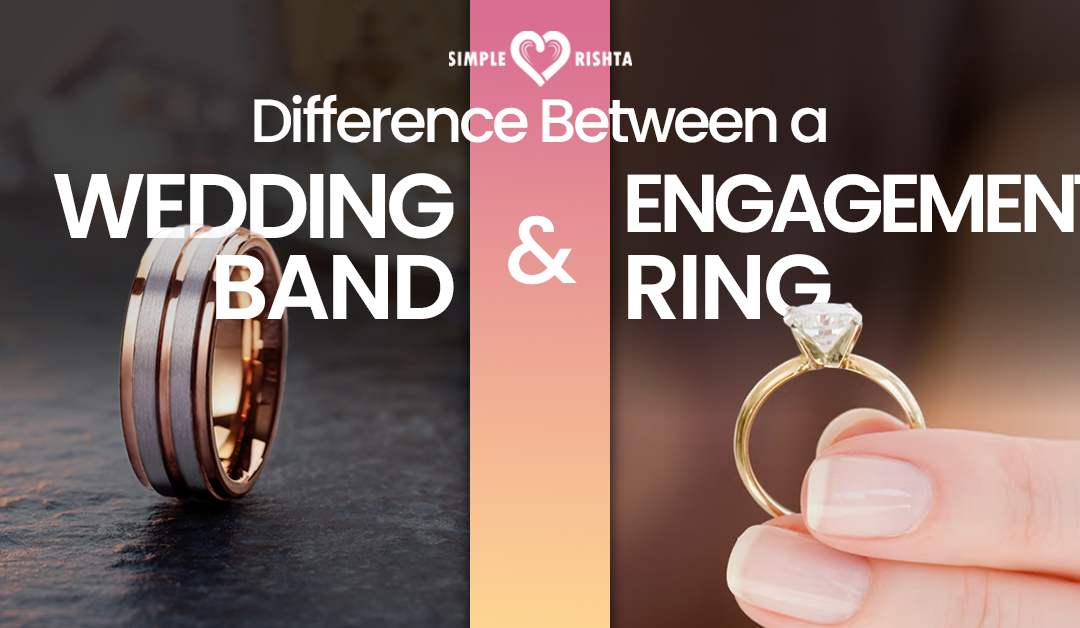
What it looks like: Most engagement rings feature a main gemstone—diamonds remain classic, but sapphires, emeralds, and other stones are trending. Jewelers design them to stand out, often with a large center stone and sometimes smaller stones along the band. These rings make everyone exclaim, “Ooooh, let me see!” When you announce your engagement.
When it’s given: Couples exchange engagement rings during a proposal to signal their commitment to marry.
Who wears it: Traditionally, women wear engagement rings, though many modern men choose to wear them too.
The meaning: The engagement ring represents promise and commitment. It reminds everyone that the couple is planning their lives together.
What is a Wedding Band?
A wedding band, also called a wedding ring, represents the official union of marriage. Couples exchanged it during the wedding ceremony. Both spouses wear a band to show they are married.
Jewelers usually design wedding bands to be simpler than engagement rings, which often feature more details.
What it looks like: Wedding bands often have simpler designs. They usually consist of a plain metal band (gold, platinum, or white gold) or a band with small accent of diamonds. Couples select bands that complement, not compete with, the engagement ring. Many choose bands that sit flush against the engagement ring.
When it’s given: Couples exchange wedding bands during the ceremony as they recite their vows.
Who wears it: Both partners wear wedding bands. This is the ring that shows you’re officially married.
The symbolism: This represents the actual marriage—the vows, the commitment, the “for better or worse” part. It’s the permanent symbol of your union.
Wedding Band vs Engagement Ring: Key Differences
- Timing: Couples give engagement rings before marriage, while they exchange wedding bands during the ceremony.
- Design: Engagement rings often have large, eye-catching stones. Wedding bands are simpler and more understated.
- Cost: Engagement rings usually cost more because the central gemstone adds to the price. Couples find wedding bands more budget-friendly, though platinum or diamond-encrusted bands can still cost a lot.
How to Choose the Right Ring
Choosing an engagement ring or wedding band is exciting but can also feel overwhelming. Keep these tips in mind:
- Consider your style: Decide whether you prefer bold, sparkling designs or simple, classic ones.
- Keep daily wear in mind. Large-stone engagement rings require extra care, while wedding bands last with minimal maintenance.
- Choose a budget that works for you and pick something meaningful within it.
- Decide whether you want the rings to match or complement each other. Both choices work equally well.
- Make sure you get the right size, as comfort is important, especially for a wedding band you will wear every day.
How to Wear Your Engagement and Wedding Rings
Traditionally, people wear both engagement and wedding rings on the same finger, called the “ring finger,” which is the fourth finger on the left hand next to the pinky.
The idea of wearing a ring on this finger started in ancient Egypt, where it was believed a vein ran directly to the heart. Although this isn’t anatomically true, the symbolism of love and commitment has continued through Roman times and into modern traditions.
The tradition of giving an engagement ring itself dates back to ancient times, but today it has become a global custom. In countries like the United States, the United Kingdom, France, and Italy, engagement rings play a central role in proposals and pre-wedding celebrations.
Similarly, in Asian countries such as India, Pakistan, and Japan, giving an engagement ring has become a meaningful ritual, representing love, commitment, and the exciting journey toward marriage.
In Indian and Pakistani wedding customs and traditions, couples give engagement rings as an important part of pre-wedding celebrations. The rings bring families together and officially mark the promise of marriage.
- Before the Wedding
When you receive your engagement ring, wear it on your left ring finger. Waiting to wear the wedding ring until the wedding ceremony.
- During the Wedding
At the ceremony, when the wedding bands are exchanged, the engagement ring is often temporarily moved to the right hand. This lets them place the wedding band closest to the heart on the left hand, with the engagement ring on top. This arrangement also helps them slide the wedding band easily without moving the engagement ring.
- After the Wedding
After the wedding, most people move their engagement ring back to their left hand to wear it together with the wedding band. They place the wedding ring first, closer to the heart, and then set the engagement ring on top.
Many couples choose matching bridal sets, so the rings sit neatly together and don’t scratch each other. Some even solder the rings to keep them from twisting or moving out of place. While most people follow tradition, some wear only the wedding band every day or stack extra rings for a unique style.
The Bottom Line
So, after discussing wedding bands vs engagement rings, here’s the simple truth: the engagement ring is the question; the wedding band is the answer that lasts a lifetime. One ring starts the conversation, and the other seals the commitment. Together, they tell your love story, with each piece representing a different chapter.
At the end of the day, these rings symbolize your love. The magic doesn’t come from the carat weight or the metal type; it comes from what they represent: choosing each other, day after day.
Whether you pick a big diamond on a simple gold band, a sapphire, or a zircon, what matters most is that it feels right for your relationship. The best ring makes you smile every time you look at it and reminds you why you chose each other.
Now go ahead and shop for your ring with confidence; you’ve got this!
Frequently Asked Questions
Can I use my engagement ring as my wedding ring?
Yes, many people do, especially for a minimalist look.
What are the 4 rings a woman should receive?
Traditionally, a woman may receive four important rings throughout her life: the engagement ring at the proposal, the wedding band exchanged during the marriage ceremony, an eternity ring often given to mark significant milestones or the birth of a child, and an anniversary ring to celebrate a special anniversary or achievement in the marriage.
Do you keep wearing an engagement ring after marriage?
Most women continue wearing it alongside their wedding band, while others may reserve the engagement ring for special occasions.
Are engagement ring and wedding ring the same?
No, an engagement ring is for the proposal, and a wedding ring is exchanged at the ceremony.
Can I wear both rings on the same finger?
Yes, the wedding band usually goes below the engagement ring on the fourth finger of the left hand.
Can the engagement ring also serve as the wedding ring?
Yes, especially for those who prefer simplicity. Some couples choose a single ring to serve both purposes, which can be practical and stylish, while still holding the same meaning of love and commitment.
Do men wear engagement rings?
Traditionally, men only wear a wedding band, but modern trends are changing. Some men now choose to wear an engagement ring as well, especially in cultures or couples who want matching or complementary rings.
In which hand is the engagement ring worn in Pakistan?
In Pakistan, as well as in other South Asian countries like India, the engagement ring is traditionally worn on the right hand.
Do Muslims wear engagement rings?
Yes, many Muslims choose to wear engagement rings, usually made of silver or other permissible metals. Wearing an engagement ring is a cultural tradition, not a religious requirement in Islam.